
In the spotlight: Marc Babinski
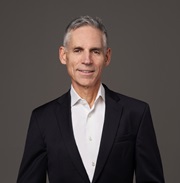 This interview was conducted in April 2026. Marc Babinski retired from his role as chief legal officer at Chantier Davie shortly after. We congratulate him on a remarkable career and thank him for sharing his story with the BLG alumni community.
In 2014, after 25 years at BLG, Marc Babinski made a move that might surprise those who equate success with staying in private practice. He stepped in-house to then-revived Chantier Davie, where he spent 12 years as chief legal officer, helping the company to join Canada’s National Shipbuilding Strategy and acquire shipyards in Finland and Texas, leaving behind a repair and icebreaker order book that will create jobs beyond the next decade. In a candid conversation with Vincent Frenette, regional managing partner in BLG’s Montréal office, a longtime colleague and friend, Marc reflected on his career, on what defines professional excellence and on the lasting value of the relationships he built at BLG.
Vincent Frenette (VF): After 25 years at BLG, ultimately becoming a partner, what initially attracted you to a role at Chantier Davie, and what made it feel like the right opportunity at that point in your career?
Marc Babinski (MB): I didn't see it as a move from a BLG partnership to a corporate title. It felt more like a continuation of my professional evolution, and BLG gave me the room to follow that path in an entrepreneurial and value-building context.
I started in BLG’s Ottawa office doing commercial work. Then, the high-tech boom led me to shift into venture capital, startups and labour-sponsored funds, which brought me early into business law and transactions.
When the Ottawa market slowed, I was able to move to BLG’s Montréal office for access to bigger transactions; a few years later, I met the current owners of the shipyard. By then, I was already working more closely with business owners and thinking further ahead about the kind of career I wanted.
That’s how the move to Chantier Davie felt like a continuation of a path started years earlier, not a departure. I was also deeply impressed by the business acumen of the owners, with whom I was able to work closely, and that clinched it for me.
VF: Over the past 12 years, Chantier Davie has entered a new phase of growth and visibility. As chief legal officer (CLO), how did you build the legal function to support that trajectory, and what skills have been most important in helping the business move quickly while managing risk?
MB: When you work closely with owners, the measure of success is clear: are you helping build something more valuable? That became the guiding principle in my work. From there, a lot follows logically: you quickly see what is not contributing to the value of the business, and you focus on material risks rather than trying to manage every conceivable one.
I kept returning to an old but useful maxim attributed to J.P. Morgan: "I don't want a lawyer to tell me what I cannot do. I hire them to tell me how to do what I want to do."
At Davie, this has meant building a legal function that relies on BLG and other trusted advisors who understand how legal services can support an entrepreneurial business.
VF: Technology is changing the way lawyers work. How do you see tools like AI fitting into the practice of law?
MB: Adopting new technologies to improve efficiency has been part of the practice for decades – AI is simply the latest development we are learning to use in new ways without sacrificing professional responsibility. I am thinking here in particular of maintaining solicitor-client privilege and guarding against hallucinations. The use of AI agents in running something like a bankruptcy law practice is also worth watching. Each lawyer and each firm will learn as they go, and the profession has demonstrated its capacity to adopt new technologies without compromising what sets it apart from other professional service providers. I would, however, worry about a pitch from external counsel that relies exclusively on AI as a differentiator.
VF: Even after leaving the firm, you've stayed closely connected to BLG. What does that connection look like in practice, and why is it important to you?
MB: It's working together. That's when I have the most fun. On complex, cross-border matters, we have leaned on expertise from BLG, and the continuity that comes from working with people who already know how you think has been invaluable. We would not have executed those files as well with another firm.
But beyond that, they're my friends. The formal alumni network is appreciated, but what matters most is the informal connection that has persisted with colleagues in Ottawa and Montréal. I don't see enough of them, the way you sometimes feel about friends, but when we do connect, it's meaningful.
VF: Who from your time at BLG has had the longest or most meaningful impact on your professional life?
MB: The earliest influences were the senior partners in the Ottawa office I had the chance to work with. They set the tone for everything that followed. These individuals were exemplary in what it meant to be a legal professional.
Later, as the firm expanded and I worked more across offices, I was influenced by approaches in Toronto and Montréal as well. As a professional, you are always looking to other lawyers for inspiration and confirmation of the values you want to pursue.
Lawyers are lucky in that sense. You can develop a clear idea of what a good lawyer looks like, and if you care about the craft, you never stop wanting to get better.
VF: What is taking most of your time now, and how has your role evolved?
MB: A lot of it is still work but at a bigger-picture level, with other lawyers handling the detail. I provide strategic direction with a solid understanding of the detail, but I'm not implementing it myself anymore. In parallel, the modernization of the shipyard has pushed me deeper into areas like environmental and construction law, which has been genuinely interesting. That is part of the evolution of a lawyer's practice.
The relationships built at BLG extend well beyond time at the firm. Whether you are a former colleague looking to reconnect or simply want to learn more about our community, discover the BLG Alumni Network.